
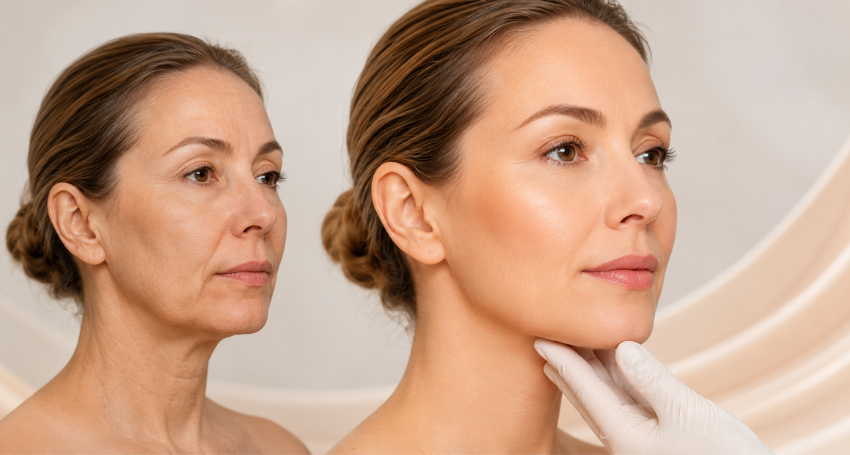
Losing weight can feel like a big win. Your clothes may fit better, your energy may improve, and you may feel healthier overall. But sometimes, weight loss can also change the way your face looks. You may notice less fullness in your cheeks, looser skin around your jaw, or a more tired appearance.
These changes can be especially noticeable after fast or significant weight loss while using GLP-1 medications. The popular term GLP-1 Face describes these facial changes, but it is important to understand that it is not a medical condition itself.
The good news is that facial changes after weight loss do not always need treatment. Healthy habits can support your skin, and several professional options may help if you are unhappy with changes in facial volume or skin firmness.
What Is GLP-1 Face?
GLP-1 face refers to changes in facial appearance that may happen after losing a significant amount of weight. The face naturally contains fat that helps give the cheeks, temples, under-eye area, and other parts of the face their shape.
When you lose body fat, you can also lose some of this facial fat. As a result, your face may look thinner or less full. The skin may also appear looser because it has less underlying support.
The term is often linked to GLP-1 medications because some people lose weight quickly while taking them. However, these facial changes are mainly related to weight loss itself rather than the medication directly changing the face.
GLP-1 Face Caused by Weight Loss
Weight loss does not affect every person’s face in the same way. Genetics, age, starting weight, the amount of weight lost, and skin elasticity can all play a role.
For example, someone who loses a large amount of weight over several months may notice deeper lines or flatter cheeks. Another person may lose the same amount of weight but see very little change in their face.
This is why there is no single appearance or timeline that applies to everyone.
What Does a GLP-1 Face Look Like?
Facial changes after weight loss can look different from person to person. Common changes may include less fullness in the cheeks, more noticeable lines, loose skin around the jaw, or a slightly hollow appearance around the temples or eyes.
These changes are not necessarily harmful. In many cases, they simply reflect the loss of fat that once supported the skin.
Why Does Rapid Weight Loss Affect Facial Skin?
Your skin needs time to adjust when your body changes. When weight comes off quickly, the face may lose fat faster than the skin can adapt to its new shape.
Think of a cushion filled with stuffing. If you remove some of the stuffing, the cover may become less full and may develop folds. Facial fat works in a similar way by providing some of the structure underneath the skin.
Age also matters. Younger skin usually has more collagen and elastin, which help it stretch and bounce back. As we get older, these proteins naturally decrease, so skin may not tighten as easily after weight loss.
Loss of Facial Fat and Volume
Fat gives the face much of its natural shape. It helps make the cheeks look full and supports areas around the eyes, temples, and mouth.
When this fat decreases, certain facial features can become more noticeable. Cheekbones may look sharper, the cheeks may appear flatter, and the temples can look slightly hollow.
This does not mean that losing facial fat is unhealthy. It is simply one of the visible effects that can come with significant weight loss.
Changes in Skin Elasticity
Skin elasticity is its ability to stretch and return toward its original shape. Collagen and elastin are important parts of this process.
After major weight loss, skin may not completely tighten around the smaller amount of tissue underneath it. Sun exposure, smoking, age, genetics, and the amount of weight lost can also affect how well skin recovers.
How to Prevent GLP-1 Face
You cannot always prevent facial changes during weight loss. Your body decides where it stores and loses fat, and genetics play a major role.
However, you can support your skin and avoid making the changes more noticeable. A sensible weight-loss plan, good nutrition, enough fluids, and daily skin protection are useful places to start.
Gradual Weight Loss
Losing weight at a steady pace can give your body more time to adjust. A healthcare professional can help you decide what rate of weight loss is appropriate for your health and treatment plan.
If you take a GLP-1 medication, follow the dose and schedule given by your healthcare provider rather than changing it yourself to lose weight faster.
Slow and steady progress is usually more helpful than trying to reach your goal as quickly as possible.
Get Enough Protein for Skin Health
Protein provides amino acids that your body uses to maintain and repair tissues, including skin. During weight loss, getting enough protein can also help support muscle mass when combined with appropriate exercise.
Good sources include eggs, fish, poultry, dairy products, beans, lentils, tofu, and other protein-rich foods.
Your individual protein needs can vary, so ask a doctor or registered dietitian for advice if you are unsure how much you need.
Stay Hydrated During Weight Loss
Water does not restore lost facial fat, but staying hydrated supports normal body functions and helps prevent dehydration.
Make water your main drink and pay attention to signs that you may need more fluids, especially during exercise or hot weather. If your healthcare provider has given you specific fluid restrictions, follow their advice instead.
Protect Your Skin After Weight Loss
Sun exposure can damage collagen and speed up visible skin aging. Protecting your face from the sun is therefore important whether you are losing weight or maintaining your weight.
A broad-spectrum sunscreen, protective clothing, shade, and avoiding prolonged direct sunlight can all help protect your skin.
These habits will not prevent facial fat loss, but they can help your skin stay healthier over time.
Skincare for GLP-1 Face
A simple skincare routine can support the condition and appearance of your skin. You do not need a shelf full of expensive products.
A gentle cleanser, moisturizer, and daily sunscreen can provide a strong basic routine. Some people may also benefit from ingredients such as retinoids, but these products are not suitable for everyone and can cause irritation.
If you are pregnant, trying to become pregnant, or have sensitive skin, speak with a healthcare professional before starting certain active skincare ingredients.
How to Minimize the Appearance of GLP-1 Face
Skincare can improve the surface of the skin, but it cannot replace facial fat that has been lost during weight loss.
If your main concern is dryness or rough texture, moisturizing regularly may make your skin look smoother and healthier. If loose skin or volume loss is your concern, professional treatments may provide more noticeable results.
It is also worth giving your body some time to adjust after reaching a stable weight. Your appearance may continue to change for a while.
Facial Volume Restoration
When facial volume loss is the main concern, restoring volume can make the face look fuller and more balanced. The best approach depends on which areas have changed and how much volume has been lost.
A qualified dermatologist or other appropriately trained medical professional can examine your face and discuss suitable options.
Treatment should focus on creating a natural result rather than simply adding as much volume as possible.
Dermal Fillers for Facial Volume Loss
Dermal fillers can add volume to specific areas of the face. Some fillers use substances that are already found naturally in the body, while others use different materials.
They may be used in areas such as the cheeks or temples when appropriate. Results vary depending on the product, treatment area, and individual.
Fillers are medical procedures and can have risks, including swelling, bruising, infection, and, rarely, serious complications. Always choose a qualified, experienced medical professional and discuss the risks before treatment.
Skin Tightening After Weight Loss
If loose skin is the main concern rather than lost volume, skin-tightening treatments may be considered.
Depending on the situation, professionals may use energy-based treatments or other procedures designed to stimulate collagen and improve skin firmness. Results are usually gradual, and not every treatment works equally well for every person.
A consultation is important because the best option depends on skin quality, the amount of looseness, and your overall goals.
Fillers and skin tightening are not the only possibilities. In some cases, a doctor may discuss treatments such as collagen-stimulating procedures or, when there is substantial excess skin, surgical options.
The right choice depends on the problem being treated. A person with volume loss may need a different approach from someone with significant loose skin.
Be cautious of products or treatments that promise to completely reverse facial changes overnight. Realistic results usually require patience and professional guidance.
When Should You See a Dermatologist?
Consider speaking with a dermatologist if facial changes are bothering you, especially after significant weight loss.
A professional can determine whether the main issue is lost volume, loose skin, changes in skin texture, or a combination of factors. They can also help you understand which treatments are realistic and which ones may not be worth the cost or risk.
You should also speak with the healthcare professional managing your weight-loss treatment if you are losing weight very quickly, struggling to eat enough, or experiencing concerning symptoms.
Can GLP-1 Face Go Away on Its Own?
Some facial changes may become less noticeable after your weight stabilizes. Your body can continue adjusting after active weight loss stops, so it may be helpful to avoid rushing into cosmetic treatment immediately.
However, lost facial fat does not always return on its own. Loose skin may also remain, particularly after substantial weight loss.
If you are unsure whether to wait or consider treatment, give your body time to reach a stable weight and discuss your options with a qualified professional.
Conclusion
Facial changes after weight loss are common and can vary from person to person. Healthy nutrition, hydration, sun protection, and gradual weight loss can help support your skin, while professional treatments may help address volume loss or loose skin when needed.
If you’re concerned about changes in your appearance after weight loss, My Secret Med Spa can help you explore personalized options designed around your goals.
A professional consultation can help you understand which approach may be right for you and what results you can realistically expect.